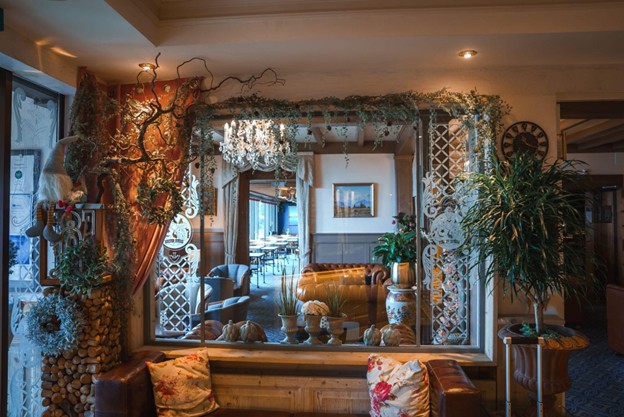
In conversations around interior design, Chanel Postrel often emphasizes a distinction that quietly defines truly timeless homes: the difference between spaces that are decorated and those that feel collected. While both may appear visually cohesive, only one carries a sense of depth, history, and lived experience.
A decorated room tends to arrive all at once, assembled with precision and immediacy. A collected interior, on the other hand, unfolds gradually. It reflects a series of decisions shaped over time, pieces chosen not only for how they look but also for how they resonate, contrast, and endure.
This distinction is subtle, yet it is often what separates a visually appealing space from one that feels genuinely meaningful.
Why “Perfect” Interiors Often Feel Incomplete
There is a growing tendency to pursue interiors that feel instantly complete, balanced color palettes, matching finishes, and carefully coordinated furnishings. While visually satisfying, such spaces can lack the nuance that makes a room feel personal.
Collected interiors resist this kind of uniformity. Instead of striving for perfection, they allow for variation and evolution.
- A slight contrast in wood tones introduces depth rather than discord
- A worn antique surface softens the sharpness of modern lines
- An unexpected object adds narrative rather than distraction
These elements work together not by matching, but by conversing. The result is an environment that feels layered rather than staged.
The Influence of Time as a Design Element
Historically, interiors, particularly those influenced by 18th-century design, were never conceived as finished compositions. Rooms evolved alongside the lives lived within them. Furniture was acquired, inherited, or repurposed. Decorative elements shifted as tastes changed or circumstances demanded.
This gradual accumulation created spaces that felt inherently balanced, not because they followed a formula, but because they reflected continuity.
A collected interior embraces this same principle. Time becomes an invisible collaborator, shaping the space in ways that cannot be replicated through immediate design solutions.
The Role of Antiques as Anchors
Antiques introduce more than aesthetic contrast; they provide grounding. Their presence carries a sense of permanence that newer pieces often lack.
Rather than dominating a room, these elements act as anchors:
- They establish a visual and emotional focal point
- They introduce texture and patina that cannot be artificially reproduced
- They connect the space to a broader historical narrative
When thoughtfully integrated, antiques do not make a space feel dated. Instead, they give it context.
Modern Elements as Counterbalance
A collected interior is not defined by nostalgia alone. Contemporary elements play an equally important role, offering clarity and restraint where needed.
The balance between old and new is not about proportion but intention.
- Clean-lined furniture can offset ornate detailing
- Neutral tones can temper richly layered patterns
- Minimal forms can create space for more expressive pieces to stand out
This interplay ensures that the space remains dynamic rather than fixed in a single era.
Avoiding the “Showroom Effect”
One of the most common challenges in modern interior design is avoiding a space that feels overly curated in a commercial sense. When every element appears newly acquired or perfectly coordinated, the result can feel impersonal.
Collected interiors move in the opposite direction. They introduce variation, subtle inconsistencies, and moments of restraint.
- Not every surface needs to be styled
- Not every piece needs to align with a single theme
- Not every space needs to feel complete
This restraint allows the room to breathe, creating an atmosphere that feels both intentional and effortless.
The Quiet Power of Restraint
An often overlooked aspect of collected interiors is what is left out. Thoughtful editing plays a crucial role in maintaining balance.
Rather than filling every corner, emphasis is placed on allowing certain elements to stand on their own.
- A single statement piece can carry more impact than multiple smaller accents
- Negative space can highlight texture and form
- Selective layering can prevent visual fatigue
This approach ensures that the space remains engaging without becoming overwhelming.
Designing for Continuity, Not Completion
A collected interior is never truly finished. It remains open to change, adaptation, and reinterpretation.
This perspective shifts the role of design from achieving an end result to cultivating an ongoing process. Each addition or adjustment becomes part of a larger narrative, rather than an isolated decision.
Over time, the space gains a sense of authenticity that cannot be manufactured. It reflects not only aesthetic preferences but also the passage of time and the accumulation of experience.
Toward a More Intentional Interior Language
The distinction between decorating and collecting is not defined by budget, style, or access to rare pieces. It is shaped by mindset.
A collected interior values:
- Depth over immediacy
- Contrast over uniformity
- Evolution over completion
These principles create spaces that feel grounded, expressive, and enduring.
In this approach, design moves beyond visual appeal and becomes a form of quiet storytelling, one that continues to unfold long after the initial decisions have been made.